
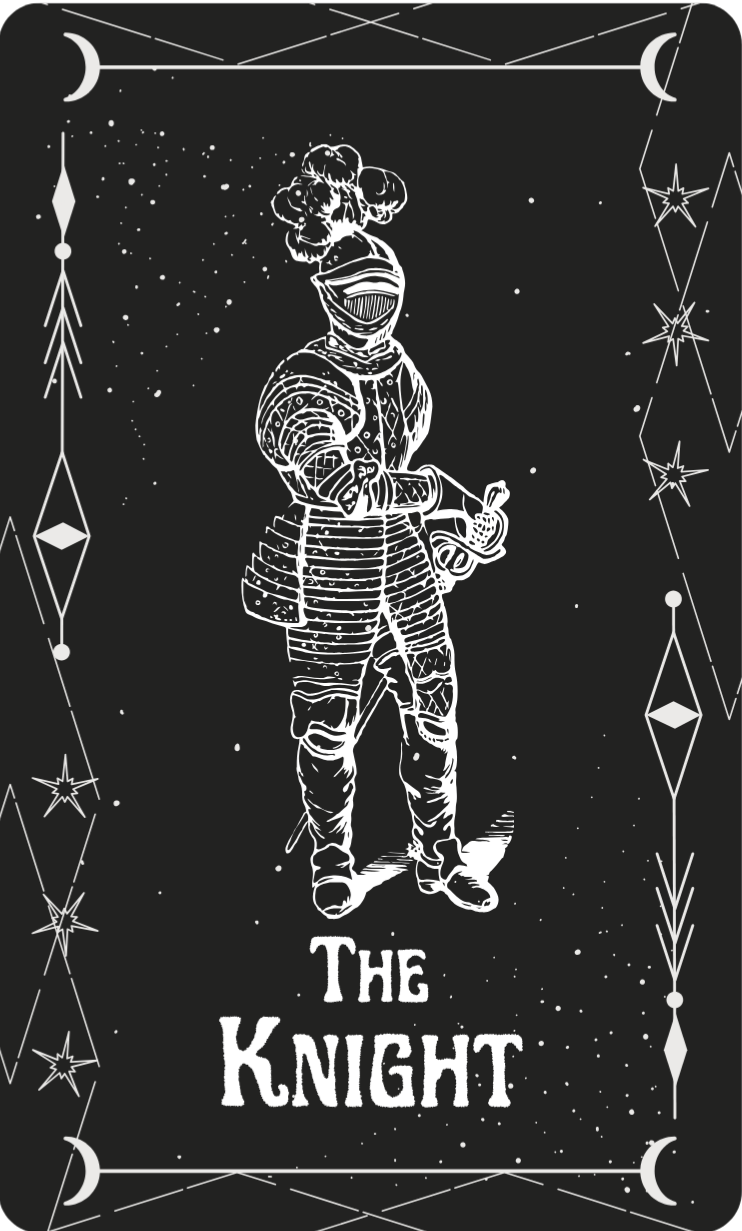
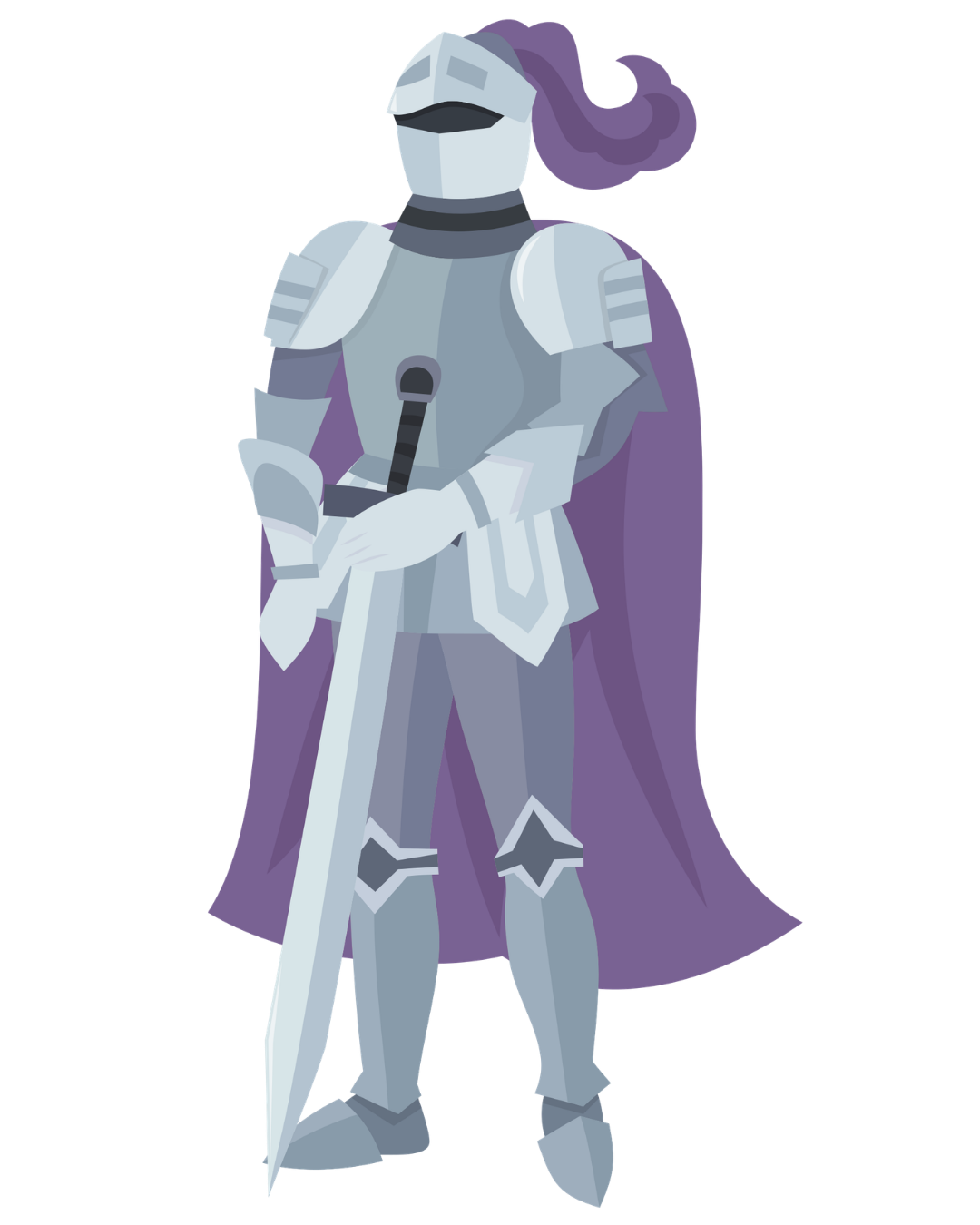
You're a Knight.
You've got a plan, but you're not afraid to rip it up and follow your heart.
You started with an outline. You just didn't stay married to it.
Somewhere around chapter four, or maybe chapter twelve, a better idea showed up, one that changed the tone, the ending, or the entire reason the story exists, and you followed it without much of a fight. You're not precious about your first plan. You never really have been.
Your story has probably shifted direction more than once since you started. Not because you didn't know what you were doing, but because you found out something better along the way, and going back felt more honest than pushing forward with the old version.
Other writers treat their outline like a contract, but yours is just a starting point. A draft of a draft. It evolves and adapts as you write.
You might think it makes you indecisive or that you need to learn to stick with your initial concept. But really, it means you're paying attention and you care about the conceptual quality of your project the way most writers never learn to. I'm here to prove that to you.
What makes Knights extraordinary:
You're adaptable in a way most writers have to learn the hard way. When a new idea threatens to derail your plan, you don't panic and you don't ignore it out of stubbornness. You actually consider it, and more often than not, you're right to!
Your instincts for what makes a story better are sharp. You've killed darlings other writers would have fought to protect, because you could see, clearly, that the story wanted something else. That's a huge skillset. Most writers spend years learning to let go that easily.
You’re more likely to follow bold ideas and go places most other writers would never dare, which makes your projects stronger and more unique.
You're also, by nature, easy to work with. Because you're not attached to any one version of the story being the only right one, you take feedback well, you collaborate well, and you don't fall apart when something needs to change. Editors and co-writers love you for this, even if you don't always notice it about yourself.
And when the aha-moment hits, when a piece finally clicks, and the whole story makes sense in a new way, you act on it. That instinct is rare, and it's usually what makes your stories good instead of just competent.
Famous Knights
You're in good company because these characters would absolutely be Knights if they sat down to write.

Armin Arlert
(Attack on Titan)
Armin would show up with a plan, and the second it stopped fitting reality, he'd let it go without sentimentality and build a better one on the spot. He's not attached to being right the first time. He's attached to getting it right, eventually, however many versions that takes. The outcome is what matters most, no matter how you get there.

Sherlock Holmes
(Sherlock Holmes)
Sherlock would treat every loose thread in his manuscript as a clue he hasn't solved yet, and he wouldn't stop pulling at it until it made sense. Give him a plot hole, and he'll have four ways to fix it within the hour, and probably talk you through all four before picking the best one. The problem is he'd never quite believe the case was closed.

Annalise Keating
(How to Get Away with Murder)
You rebuilding the entire back half of the book two days before your deadline, and pulling it off.
Annalise doesn't get precious about a plan when the plan stops serving her. She'll tear up a strategy at the eleventh hour and build a better one under pressure, because she trusts her own judgment more than she trusts consistency for its own sake. She'll also work through the night to make it happen, because stopping before it's right has never really been an option for her.Where Knights Get Stuck
Of course, there's a flip side.
You've rewritten your first three chapters more times than you can count, and you still haven't reached the end. Every revision solves one problem and creates two more, so pulling on one thread means untangling three others, and you're back in the fairy lights again.
The aha-moments keep coming, and that's the problem. Each one makes the story better, genuinely better, so you follow it. The reason you get stuck is that your instincts never stop firing, and they’re usually too fast for you to keep up with.
And you probably don't know when to call it. There's always one more thing you could smooth out, one more subplot that would add texture, one more pass that would tighten it further. Workaholic tendencies don't help; you'd rather put in another late night than leave something that could be better.
This challenge will help you understand how to keep the adaptability that makes your writing good, while learning to recognise when a change is actually serving the story, and when it's just another loop in the fairy lights.

Your free personalised challenge starts here.
Seven days, built for Knights. Sign up below and your first email arrives today.
Here's what the next seven days look like.
Every day, you'll get one email. Not a wall of theory, I promise! A short, readable piece followed by a small action point you can do that day. It's designed to fit around real life: twenty minutes, or two hours, depending on what you've got.
Each email is written specifically for Knights. That means the insights are about your patterns, the exercises are matched to your creative process, and the prompts are designed to work with how your brain operates.
Over the course of the week, you'll:
- Understand the psychology behind the blocks Knights hit most often
- Work through exercises that help you tell a genuine improvement from a loop
- Get daily prompts and leading questions that help you move forward instead of circling back
- End the week with new pages and a clearer sense of when a draft is actually done
The goal for the week: write a full chapter.
For you, as a Knight, the writing has never really been the issue, so instead of generating more changes, we'll focus on finishing. We'll look at how to trust the plan you've already rebuilt, follow it forward instead of back, and recognise the difference between an aha-moment worth chasing and one that's just another reason to stall.
The challenge is free. It starts today, and it was made for the way your brain works.
Start your challenge!