
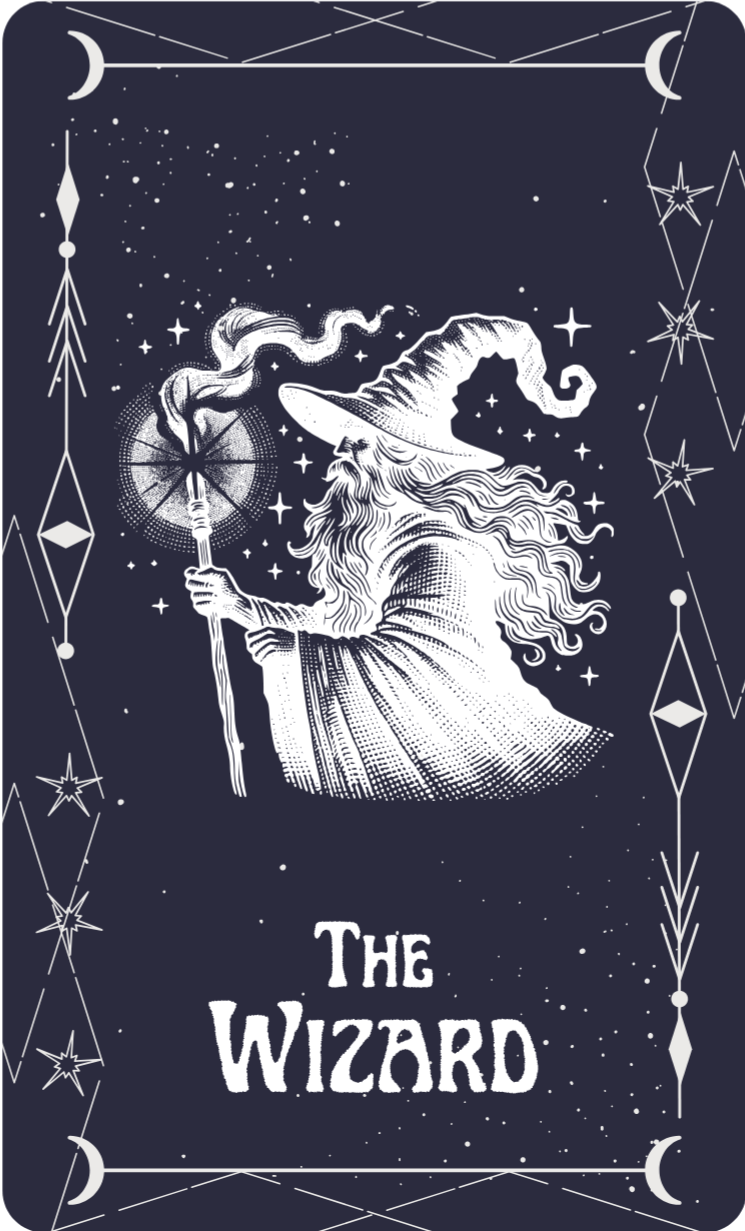
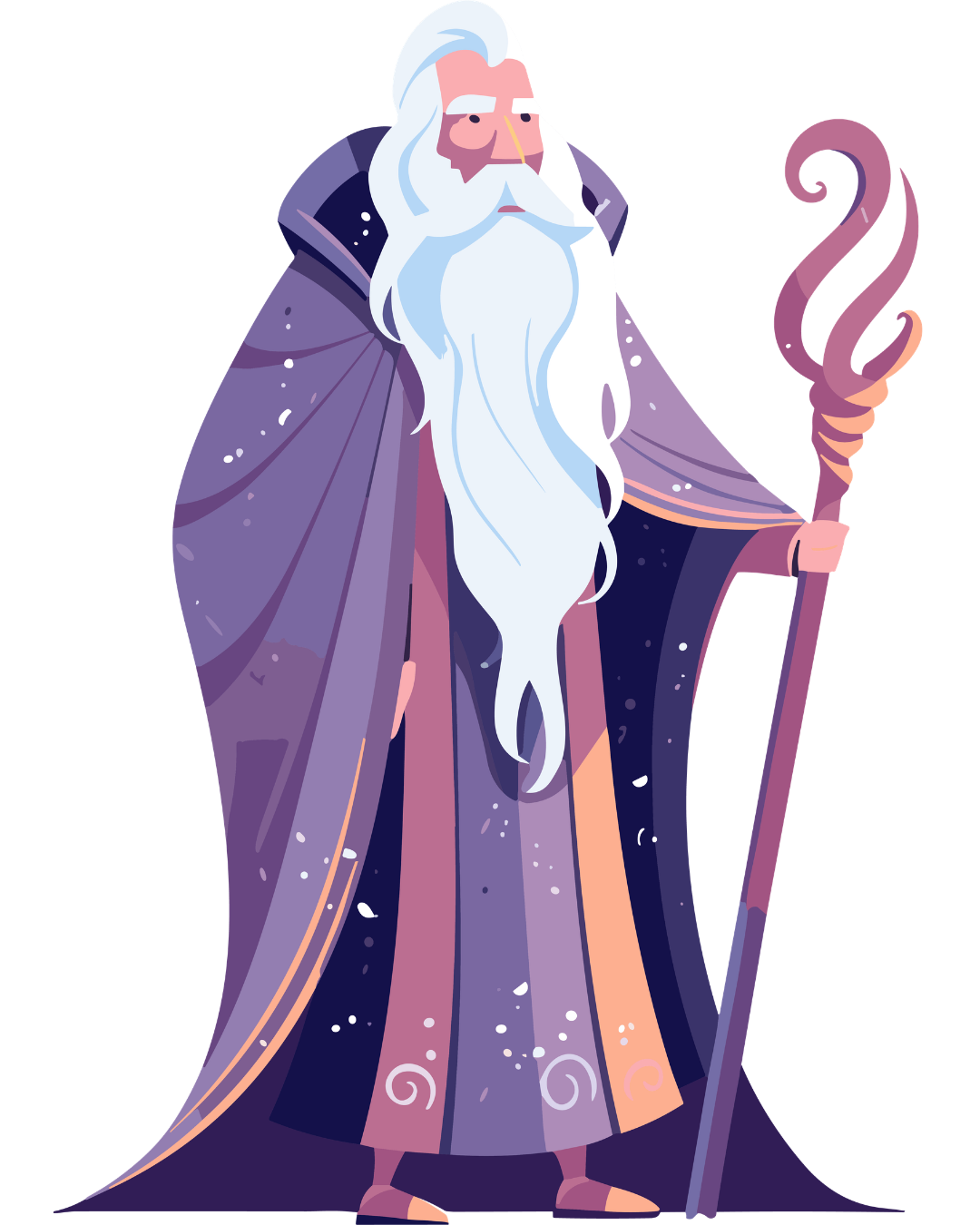
You're a Wizard.
You've built the world. Now, where's the story?
You didn't necessarily set out to write a 50-page story bible. Buuuut it happened.
Somewhere along the way, "taking notes" turned into a lore document with research and world context and 10-page character sheets, and you're not even mad about it. You've got character studies for people who might not even make it into the final draft. You've got scenes written completely out of context, the kind that came to you while daydreaming with a stroke of inspiration. You've got a magic system, a family tree, a made-up language, or all three.
You fell in love with the world and your characters before ever finding the plot. It’s where all the good stuff lives.
Other writers talk about "just getting the words down," and you want to, you really do. But how are you supposed to write chapter one when you're still figuring out how the currency works in this economy, or what this character's mother was like, or what actually happened during that war you mentioned in passing in one of your out-of-context scenes?
You might think it's a distraction. Really, it's raw material most writers would beg for. I'm here to prove that to you.
What makes Wizards extraordinary:
Your worlds feel inhabited, not invented. Because you've spent real time there, your settings have the kind of texture that other writers have to fake. Readers can tell the difference between a world that exists because the plot needed it and a world that exists because someone loved it into being real.
You create characters readers will remember because they feel like people you know down to their core. You know what they would order at a restaurant in an alternate universe. That level of knowledge comes from obsession, and obsession is a gift when you're a writer.
You never run out of ideas. Ever. While other writers are staring down a blank page and wondering where to find a new project idea, you've got four half-started projects fighting for your attention and four more ideas waiting to be developed. Imagination always came easily to you.
And when a scene finally clicks into the story, it reads the way a purely plotted scene can't always manage, because it comes from your heart.
Famous Wizards
You're in good company because these characters would absolutely be Wizards if they sat down to write.

Ryan Howard
(The Office)
Ryan would have a trilogy mapped out, a Substack about his "process," an epic title, and a marketing strategy before he's written a single scene. He'd talk about his book at parties for two years. The ideas would be genuinely good. Whether any of it existed past page ten is another question entirely.
Chandler Bing
(Friends)
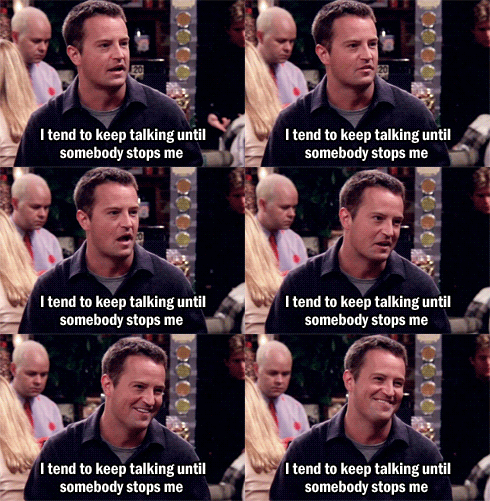
Chandler would write the funniest, sharpest scene you've ever read, and then completely avoid figuring out what it's actually part of. Committing to one story, one throughline, one ending, means committing to something that could turn out wrong, and he'd rather generate ten more perfect scenes than risk that. The material's never the problem. Sticking with it long enough to find out what it means.

Mirabel Madrigal
(Encanto)
Mirabel would be the writer with forty pages on a side character who shows up for one scene, because she got curious about their childhood and couldn't stop. She'd notice the tiny detail everyone else glossed over and build an entire emotional history around it. She loves every corner of her own world so much that she'll happily go explore all of it before she's decided which part is actually the story. Wizards will recognise this one: it's not that she doesn't care enough to finish. She cares about all of it equally, and hasn't yet picked what matters most.
Where Wizards Get Stuck
Of course, there's a flip side.
You've got a folder called "Book Stuff" with fourteen documents in it, and not one of them is a manuscript. You've started this story about four different times, from four different angles, because you kept discovering more of the world and needed to go back and understand it before you could keep going. You've got a scene from the climax fully written and not a single scene that leads up to it.
And the worst part is watching other writers with a fraction of your ideas finish things, while you're still deciding whether your magic system needs a third rule.
It's not that you can't write. You clearly can, you've got the proof sitting in that folder. It's that nobody's ever shown you how to take everything that's living in your head and give it a shape a reader could actually follow from page one to the end.
That's what this challenge will help you understand about yourself and your writing. You'll find a way to build a story around the world you already love, without flattening what made you want to write it in the first place.

Your free personalised challenge starts here.
Seven days, built for Wizards. Sign up below and your first email arrives today.
Here's what the next seven days look like.
Every day, you'll get one email. Not a wall of theory, I promise! A short, readable piece followed by a small action point you can do that day. It's designed to fit around real life: twenty minutes, or two hours, depending on what you've got.
Each email is written specifically for Wizards. That means the insights are about your patterns, the exercises are matched to your creative process, and the prompts are designed to work with how your brain operates.
Over the course of the week, you'll:
- Understand the psychology behind the blocks Wizards hit most often
- Work through exercises that help you find the throughline connecting the ideas you already have
- Get daily prompts and leading questions that turn scattered scenes and lore into forward motion
- End the week with new pages and a clearer picture of which story you're actually telling
The goal for the week: write a full chapter.
For you, as a Wizard, ideas have never been the problem, so instead of generating more of them, we'll focus on choosing. We'll look at how to take everything you've already built, the world, the characters, the scenes that came out of nowhere, and find the one thread worth following all the way through.
Don't worry, I’m not asking you to throw out the lore or pick just one project forever. We're just going to get one chapter out of one story, so you know exactly what it feels like to finish something instead of expanding it.
The challenge is free. It starts today, and it was made for the way your brain works.
Start your challenge!