
You sat down to write. You opened your document, read your last paragraph back to yourself, and then (just for a second) you picked up your phone. And forty-five minutes later, you're watching someone you've never met reorganise their bookshelf on TikTok. Meanwhile, your novel feels completely unreachable. The short videos motivated you to work on it, but suddenly even looking at it seems impossible.
That’s right. I’m finally coming for doom scrolling. We’re gonna unpack how doomscrolling is actively rewiring the parts of your brain that writing depends on most.
Hey, welcome back. It’s been a minute, I’m aware that it’s been a minute. I’ve been struggling with some health issues, but I promise I’m doing my best to post more often.
So. Doom scrolling. You already know what it is, chances are you’ve probably done it. I know I have. We've all been there. We all know it’s probably not good for our cognitive abilities. Though I am happy to report I’ve had all of my social media apps deleted for about half a year now and I don’t actively engage in doomscrolling.
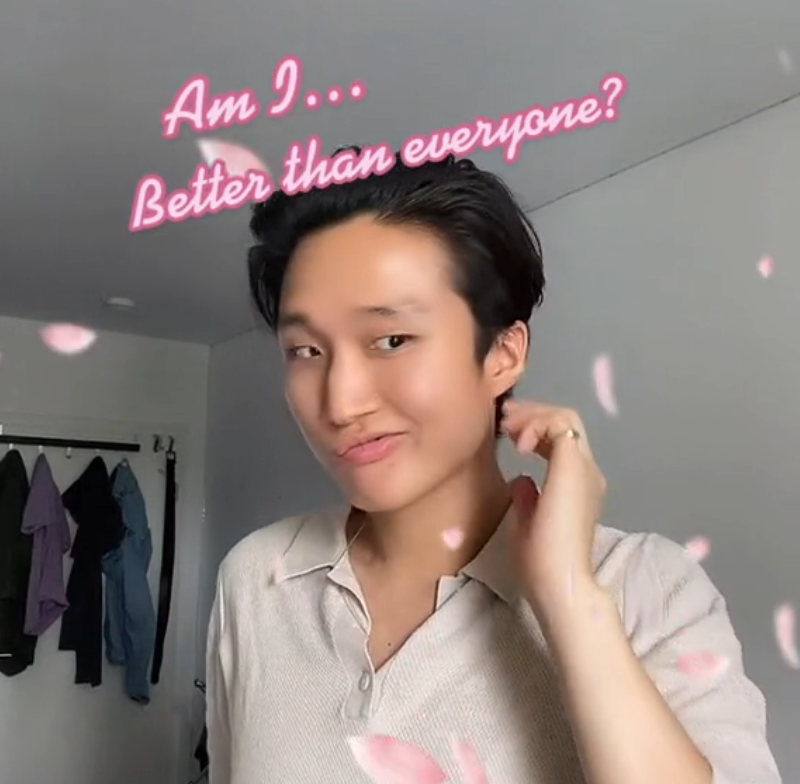
No, don’t worry, I have my own issues. Which is precisely why I’m not talking about Playstation screen time in this post.
But I want to talk about what doomscrolling does to writers.
Over the last year I have gotten so many emails from you guys wondering why you feel blocked and why you can't sit with your own story for more than twenty minutes. And I know a lot of you are not gonna wanna hear this, but doomscrolling is a huge part of the answer.
In this post, I’m gonna talk about three ways doom scrolling is making you a worse writer. Let's get into it.
#1 Tolerance
You have lost your tolerance for the hard part.
Doomscrolling has made you friction intolerant. By friction, I mean that unavoidable discomfort that comes with doing literally any creative work. Or even anything that requires remotely any effort.
Writing has a lot of friction. A chapter that just doesn’t work no matter how you write it, a character that doesn’t cooperate. The very long process of actually getting to end of that first draft.
That friction is not a sign that anything is wrong. It’s not something that you should avoid. It’s necessary. That friction is the work. The friction is what your brain needs in order to be challenged and developed. The friction is the difference between the writers who finish things and the writers who don't.
And doomscrolling is eroding your ability to manage that friction.
Every time you sit down to write and it feels hard and you get frustrated and you reach for your phone instead, you are teaching your brain one thing:
Discomfort appeared, I escaped it, now I feel better.
Do that enough times, and your brain stops being willing to sit in creative difficulty at all. Because you taught your brain that there's an easier option.
There’s an easier way to get dopamine.
Dopamine is a feel-good hormone that your brain releases when it senses it has done something good, something productive. It’s a reward hormone.
And just a few decades ago, this used to be a hormone you’d have to work for. You would have to build something, write something, get something you want, achieve a goal, exercise, socialise.
Put in effort to do something, and your brain will give you dopamine as a reward. Now, you no longer have to put in effort. You get dopamine hits every thirty seconds when you look at a funny or inspirational video on your phone.
The outcome of this is that long-term projects that you wanna tackle, things that take significant effort, no longer seem worth it to your head. Because it doesn’t know the difference between ‘quality activities’ and doomscrolling. All it knows is that it’s getting dopamine.
Even though you objectively know that you want to write, that you want to finish this book, and that you’re going to be really happy once you do. Your brain looks at the effort that needs to be done in order to get to that dopamine and it goes: Well… why would I do all that?
And you grab your phone instead.
#2 Voice
The second way doom scrolling is making you a worse writer is probably something I find a bit more sinister than lack of dopamine. You stop hearing your own voice.
There's a cognitive neuroscientist named Maryanne Wolf. She wrote a book called Reader, Come Home, and her research on what digital skimming does to the reading brain is fascinating and a little terrifying for writers specifically.
She writes that when we skim on screens, we are not doing the same cognitive work as deep reading. Deep reading (the kind you do with a novel) involves a deeper emotional process. Like building empathy by stepping into a character's perspective or generating your own thoughts in response to what you're reading. It is an active process that forces you to think in response to it, basically.
Skimming is not. Wolf says that when we skim, we literally, physiologically, don't have time to think. Or feel.
And there is a part in here that I think matters for you as a writer. She found that our brains are plastic, which means they adapt to whatever we demand of them most. If you spend the majority of your reading time skimming short-form content (which, by the way, is literally made for quick surface-level engagement), then that’s what your brain rewires around. Deep reading starts to feel more difficult. You have to put in more effort. It’s less natural to you.
Now. Why does that matter for your writing?
Because the way you read and the way you write are deeply connected. Writers develop their voice, their instincts, their sense of what a sentence should sound like, what a scene needs, what is missing from a piece of prose, almost entirely through reading.
Reading is how you absorb language at a level below conscious thought.
When you spend your reading hours with algorithmically-served short-form content, you are flooding your creative reservoir with noise.
You start to conform to someone else’s pacing, someone else’s opinion. You see someone's prose on BookTok and suddenly you think you want to write like that. You consume enough trend-driven content and you start to mistake what's popular right now for what you want to make.
Your own voice gets harder and harder to find because you are drowning in everyone else's.
We talk about reading widely as a craft practice (and that is still true; that still matters), but there is a massive difference between deep reading a novel with full attention and passive consumption of hundreds of tiny pieces of content every single day.
One fills you up. The other drains you.
And I want you to tell me in the comments, do you ever come away from a doomscrolling session feeling energised or like you actually achieved something? Or is it the opposite?
#3 Complexity
The third way doomscrolling is affecting your ability is the one I find most alarming: you’re conditioning your brain to work in very short bursts. And a novel requires the exact opposite.
Cal Newport wrote about this in Deep Work, and if you haven't read it, I genuinely think every writer should. If you have, lemme know in the comments what you thought of it.
His central argument is that the ability to focus without distraction for extended periods of time is becoming increasingly rare, and increasingly valuable. He calls it deep work: the kind of cognitively demanding, distraction-free focus that produces the best output in almost any field.
Writing a novel is deep work. It is among the deepest work that exists. You have to hold an entire world in your head. You are tracking a plot, multiple character arcs, thematic threads, foreshadowing you laid down forty pages ago, the emotional through-line of a scene, the specific voice of the point-of-view character, the pacing of the chapter. And you’re doing that all at once, for sustained hours at a time, over a period of months or years.
That is an extraordinary cognitive demand. And it requires a brain that has been trained to hold complexity.
Doomscrolling basically trains you not to linger on complex thoughts. Algorithmic short-form content is specifically designed to resolve in thirty seconds.
You go from very inspirational content that makes you feel like you’re finally going to get your life together, and then you scroll to a funny video of a cat and you just forget all about it.
The point is, there is no requirement to remember what already happened or anticipate what comes next. Your brain gets a new stimulus every few seconds, processes it minimally, takes the dopamine, and moves on.
And when you then sit down to write, your brain wants to jump. It wants the next thing. It doesn't want to sit inside the same world for a whole two, mind-numbing hours. So then, figuring out a complex scene starts to feel genuinely hard.
This is the reason so many writers feel like they can't concentrate the way they used to. Because your brain has been conditioned out of it.
The Boredom Thesis
Here is the thing I actually most want to say in this post, though.
We need to learn how to be bored again.
Think about the writers who came before us. Think about JD Salinger, who withdrew from public life to a small cabin just so he could have the space and time to think and write. Think about Virginia Woolf, who wrote extensively about needing long, uninterrupted stretches of mental quiet to access her own inner world.
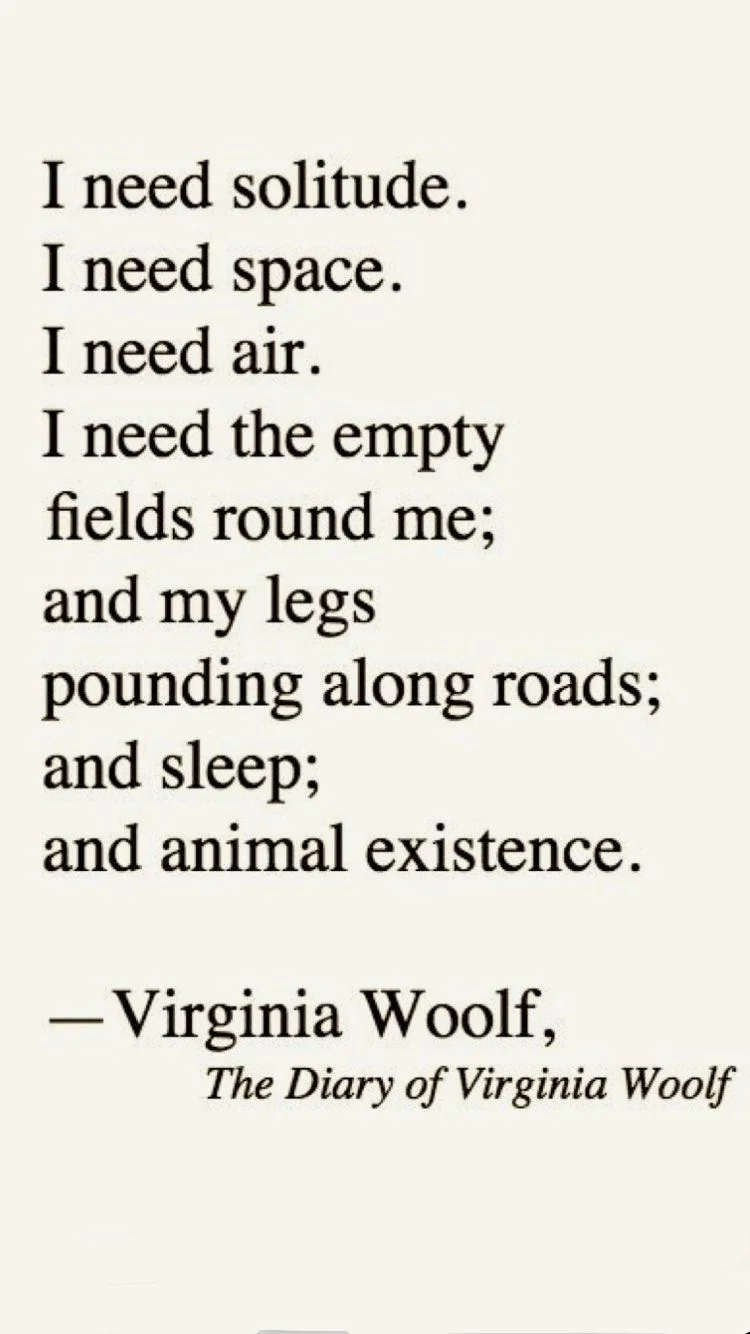
Think about how many writers throughout history described walking, daydreaming, staring out of windows, doing nothing as essential to their process.
When a writer is allowed to sit with boredom, their mind wanders. They might think of a new character, a new idea, or solve the plot hole they’ve been struggling with.
Boredom is why your brain first developed an interest in writing, probably. It is the condition that writing actually requires.
And we have burned it completely out of our lives.
Actually think about when you last let yourself be truly bored. Not just for thirty seconds before you picked up your phone, but actually bored, to the point of discomfort. There is almost no one who does this anymore.
And it’s because we have a device in our pocket that makes boredom impossible.
Writers turned to stories because our brains were hungry for stimulation. We wrote because we had something building up inside us that needed to go somewhere. We read because we were bored enough to need the escape.
Now, that craving never reaches us, you just get fed by the algorithm. You are never hungry or empty enough to need what writing fills you with.
You are permanently full … of other people's content.
What To Do?
So how do we fix this? Can we fix this?
I'm not going to tell you to delete everything and throw your phone into a river, because that’s just unrealistic in our current culture. I will give you three things worth changing, not just for the sake of your writing, but your brain in general.
One: let things be boring. Specifically in the context of your writing practice. The next time you sit down and the work doesn't flow immediately and you wanna pick up your phone, don't. Sit in that discomfort. Give your brain the chance to think of something else. Something always comes. And you might be surprised by what.
Two: protect your reading diet. Not just the quantity of what you read, but the quality of how you're reading it. Make sure you're still spending significant time with actual books, read with full attention, instead of just consuming short-form content. Your voice as a writer depends on it.
Three: train your focus like a muscle. Start small if you need to. Thirty minutes of writing with your phone in another room. Then an hour. Then two. You can also do this with reading. The capacity for deep work can be retrained. Newport's whole point is that this is a skill that responds to practice. And if you built it once, you can build it again.
Your story needs the version of your brain that can sit in discomfort and handle complexity. The good news is that version of you is still in there.
You just need to stop feeding it the algorithm long enough to remember that.
FAQ
Does doomscrolling affect creativity?
Yes, doomscrolling floods your brain with noise and makes it harder to access your own voice and ideas. The more you consume short-form content passively, the more your brain conforms to someone else's pacing and perspective instead of your own.
Why can't I focus on writing anymore?
Constant exposure to short-form content conditions your brain to work in very short bursts, making sustained focus feel genuinely difficult. The good news is that deep focus is a skill, and it can be retrained with practice.
Does social media cause writer's block?
It can contribute significantly. Doomscrolling erodes your tolerance for the friction that creative work requires, and trains your brain to seek easier dopamine hits instead of sitting with the discomfort of a difficult scene or chapter.
Why do I lose motivation to write after being on my phone?
Because your brain has already received its dopamine hit. When you then look at your novel and calculate how much effort it requires to get that same reward, it simply doesn't seem worth it anymore.
Is boredom good for writers?
Absolutely. Boredom is the condition that writing actually requires; it's when your mind wanders, solves problems, and generates new ideas. Eliminating boredom entirely from your life eliminates one of your most valuable creative tools.
How do I stop doomscrolling so I can write?
Start small: thirty minutes of writing with your phone in another room, then build up. Protect your reading diet by spending real time with books rather than short-form content, and learn to sit in discomfort rather than immediately reaching for your phone when writing feels hard.